Build a resume for 2026 jobs with future-proof skills, sharp examples, and proven career trends recruiters actually notice.
Your resume is competing in a brutal jobs market. In 2026, career trends are moving faster than most resumes can keep up. If your CV still reads like it was written for 2021, you're already behind.
A lot of people think “future-proof skills” means stuffing a resume with AI buzzwords. It doesn't. Recruiters can smell fluff from a mile away.
What they want is simpler. Proof that you can adapt, learn fast, work with tech, and solve real problems when the rules change.
What are future-proof skills on a resume?
Future-proof skills are abilities that stay valuable even as tools, industries, and jobs change. They include adaptable technical skills, strong communication, problem-solving, digital fluency, and the ability to learn quickly. On a resume, they work best when tied to measurable results, not vague claims.
That last part matters.
Saying “adaptable team player” means nothing. Saying “learned a new CRM in 10 days and cut response time by 18%” means something.
Why career trends in 2026 are changing resumes
The resume game has changed because the job itself has changed.
According to the World Economic Forum's Future of Jobs report, employers expect nearly 39% of workers' core skills to change by 2030. LinkedIn's recent skills data also shows that hiring teams are putting more weight on skills evidence than on job titles alone. And per a 2026 McKinsey analysis, companies are redesigning roles faster as AI handles more repeatable tasks.
What does that mean for you?
It means your resume can no longer be a dusty list of duties. It has to show range.
Employers are hiring for what you can grow into, not just what you've already done.
Here are the big trends shaping jobs in 2026:
- AI is automating routine admin, reporting, scheduling, and basic analysis
- Hybrid work still demands strong written communication and self-management
- More roles now blend technical, operational, and customer-facing work
- Employers want proof of upskilling, not promises to upskill later
- Internal mobility is rising, so transferable skills matter more than ever
According to LinkedIn, job posts mentioning AI literacy and cross-functional collaboration have grown sharply over the past two years. The exact wording varies by sector, but the pattern is clear.
The market is rewarding people who can do two things at once:
- work with technology
- stay very human
That mix is your edge.
The 7 future-proof skills every resume should show
You do not need all seven at expert level. But you do need evidence of several.
1. Adaptability
This is the skill behind almost every career comeback.
Can you switch systems, priorities, teams, or workflows without falling apart? Good. Put that on the page with a concrete example.
- Bad:
- Adaptable in fast-paced environments
- Better:
- Transitioned a 12-person team to a new project management platform in three weeks, reducing missed deadlines by 22%
2. AI and digital fluency
No, you do not need to be a machine learning engineer.
But if you work in marketing, operations, HR, sales, finance, support, or admin, you need to show you can use digital tools intelligently. According to PwC's 2025 AI Jobs Barometer, roles exposed to AI are changing faster and often reward workers who can integrate AI into daily tasks.
- Show:
- tools you've used
- what you improved with them
- how much time or money you saved
- Example:
- Used AI-assisted research and spreadsheet automation to cut weekly reporting time from 6 hours to 2
3. Problem-solving
Every employer says they want this. Almost nobody proves it properly on a resume.
Problem-solving is not a personality trait. It's a before-and-after story.
- Use this formula:
- problem
- action
- result
- Example:
- Identified a recurring invoice error affecting 8% of orders, redesigned the review process, and reduced billing corrections by 70%
4. Communication
This one gets underestimated because people think it's too soft.
Wrong.
In hybrid and remote jobs, writing clearly is operational muscle. If your updates are messy, your work looks messy too. According to a 2025 Grammarly and Harris Poll workplace study, poor communication continues to cost teams time, productivity, and trust.
- Show communication through outcomes:
- wrote onboarding guides
- handled client escalations
- presented findings to leadership
- coordinated across departments
5. Learning agility
This is where it gets interesting.
A lot of jobs in 2026 involve tools that barely existed a few years ago. Employers know that. They are looking for people who can learn without hand-holding.
- Example:
- Completed SQL training and applied it within 30 days to automate monthly data pulls for the sales team
That line says more than “quick learner” ever will.
6. Cross-functional collaboration
Most work now spills across departments. Product talks to marketing. Sales talks to operations. HR talks to finance. Nobody gets to sit in a silo and hide anymore.
If you've worked across teams, show it.
- Example:
- Partnered with product, support, and sales teams to launch a customer feedback loop that increased renewal rates by 11%
7. Resilience and change management
This sounds fluffy until the company restructures. Then it becomes gold.
Recruiters want people who can keep moving when plans break. If you've handled mergers, layoffs, system changes, budget cuts, or shifting targets, that experience matters.
- Example:
- Maintained 96% client retention during a six-month restructuring by redesigning service workflows and communication touchpoints
How do you add future-proof skills to a resume without sounding fake?
Use proof, not adjectives. Replace generic terms like “motivated,” “innovative,” or “dynamic” with examples, metrics, tools, and outcomes. A good resume does not claim skills. It demonstrates them in context.
That's the whole trick.
A better way to write resume bullets in 2026
Most resumes fail because they read like job descriptions.
- You know the type:
- Responsible for customer service
- Assisted with reporting
- Worked with cross-functional teams
That tells me nothing.
Try this instead.
Step-by-step: turn weak bullets into future-proof bullets
1. List the task you handled Start with the actual work you did.
2. Add the skill behind the task Was it communication, adaptability, analysis, AI literacy, or collaboration?
3. Name the tool, method, or context Mention the platform, process, or business situation.
4. Quantify the result Use percentages, time saved, revenue impact, error reduction, or volume handled.
5. Cut empty adjectives Delete words like “hardworking,” “strategic,” and “results-driven” unless the bullet proves them.
Here is the difference:
| Weak resume bullet | Strong 2026-ready bullet | |---|---| | Responsible for onboarding new hires | Built a digital onboarding workflow for 25 new hires, reducing ramp-up time by 30% | | Helped with social media | Used analytics and AI-assisted content planning to increase engagement by 42% in four months | | Worked with multiple teams | Coordinated marketing, sales, and product updates for a new launch that hit 115% of first-quarter targets |
That is how you make skills visible.
Not by shouting them. By proving them.
Which jobs benefit most from a future-proof resume?
Short answer: almost all of them.
But some roles feel the pressure faster because the tools are changing so quickly.
These jobs especially benefit from a future-proof approach:
- administrative and operations roles
- customer support and success
- marketing and content roles
- sales and business development
- HR and recruiting
- finance and analyst roles
- project and product coordination
- tech-adjacent roles that require tool fluency but not deep coding
If your work sits anywhere near automation, analytics, digital platforms, or client interaction, this matters a lot.
And if you're changing career paths? It matters even more.
A future-proof resume helps you reposition yourself. It shows employers you are not trapped inside your old title.
Mini case study: the resume rewrite that changed the story
Last year, I worked with a job seeker named Maya. She had spent five years in office administration and thought her background looked “too basic” for operations analyst roles.
It wasn't basic. It was badly translated.
- Her original resume said things like:
- managed calendars
- prepared reports
- supported team operations
- After rewriting, those bullets became:
- Managed scheduling across three departments during a software rollout, helping leadership maintain project timelines for a 40-person team
- Automated monthly reporting in spreadsheets, cutting manual preparation time by 50%
- Coordinated vendor, finance, and internal stakeholder updates to reduce approval delays by 12 days
Same person. Same jobs. Very different story.
She started getting interviews within weeks.
Why?
- Because the new version showed future-proof skills already hiding in her experience:
- adaptability
- digital fluency
- collaboration
- process improvement
That is what a good resume does. It translates your past into a language the market values now.
> 💡 Cubbbe Tip: Before sending your CV, run it through Resume Lab - CV Analysis to spot weak bullets, missing keywords, and skills gaps against real job postings.
The resume sections that carry the most weight in 2026
Not every line on your resume matters equally.
If you want recruiters to notice future-proof skills, focus on these sections first.
Professional summary
Keep it tight. Three to four lines.
This is not the place for clichés. It is the place for positioning.
Example:
Operations coordinator with 6 years of experience improving workflows, reporting, and cross-functional execution in fast-moving teams. Strong background in digital tools, process optimization, and stakeholder communication. Recently expanded into data analysis and AI-assisted reporting to support scalable operations.
Experience section
This is where hiring decisions start forming.
- Aim for bullets that show:
- impact
- tools
- adaptability
- measurable outcomes
Skills section
Do not dump 25 random terms here like you're emptying a junk drawer.
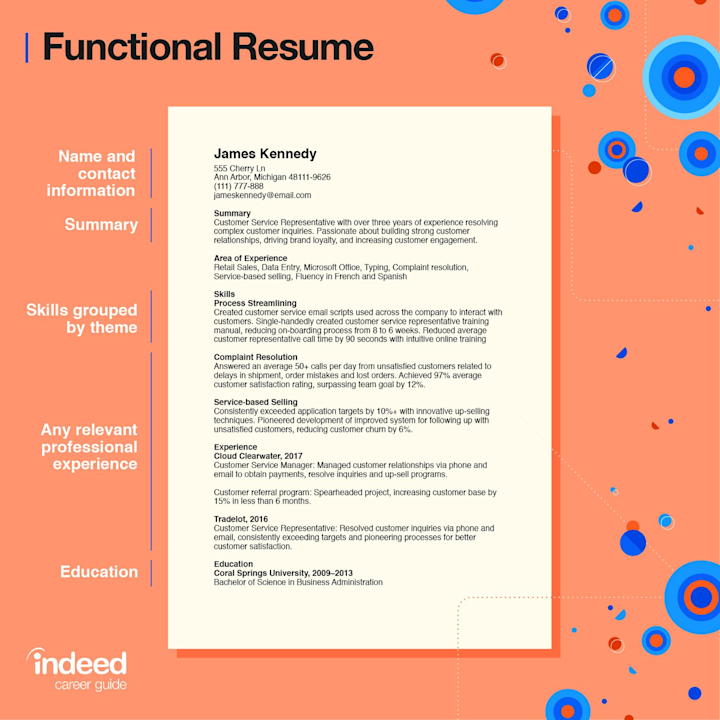
- Group skills by type:
- Digital tools: Excel, Salesforce, Notion, Tableau, ChatGPT, Asana
- Core strengths: process improvement, stakeholder communication, data analysis, training, project coordination
Certifications and learning
If you've completed recent training, include it.
Even short, credible learning can help if it matches the target role. According to Coursera's job skills reporting and LinkedIn Learning trends, employers continue to value visible, recent learning activity when it aligns with business needs.
How to tailor your resume to career trends without rewriting from scratch
You do not need to rebuild your resume every single time.
You need a strong base version and smart edits.
In practice?
Use this system:
- keep one master resume with all your best bullets
- create tailored versions for 2-3 target job types
- mirror the language used in the job posting when it matches your real experience
- move the most relevant bullets higher
- adjust your summary and skills section for each role
This takes less time than people think.
And it works better than blasting one generic resume at 80 jobs and hoping for mercy.
If you're managing several versions, Document Manager helps keep them organized without turning your desktop into a graveyard of files named `resume-final-final-v4`.
And once you start applying, track which version performs better. Analytics Dashboard can help you spot patterns in callbacks, so you're not guessing which resume actually works.
Mistakes that make your resume look outdated
Some resume habits age badly. Fast.
Watch for these:
- listing duties instead of achievements
- using “references available upon request”
- stuffing in buzzwords with no evidence
- ignoring digital tools you've actually used
- writing a summary full of vague claims
- leaving out recent learning or certifications
- keeping old experience that no longer supports your target jobs
If your resume reads like a compliance form, recruiters will treat it like one.
You want it to read like evidence.
FAQ: Future-proof resume skills for the 2026 job market
What are the best skills to put on a resume for 2026?
The best skills for a 2026 resume are adaptability, AI and digital fluency, communication, problem-solving, learning agility, and cross-functional collaboration. These skills match current hiring trends because they stay useful even as tools and job structures change.
How many skills should I list on a resume?
List 8 to 12 relevant skills on a resume, not 30. A shorter, targeted skills section is easier to scan and looks more credible when your experience bullets actually back it up.
Should I mention AI tools on my resume?
Yes, mention AI tools on your resume if you used them to improve work quality, speed, or decision-making. Name the tool only when it is relevant, and always connect it to a result such as time saved, better accuracy, or increased output.
Do recruiters care more about skills or experience in 2026?
Recruiters care about both, but they increasingly want experience presented through skills and outcomes. Job titles alone carry less weight when roles are changing quickly and employers need people who can adapt across tools, teams, and workflows.
Can I show future-proof skills if I do not work in tech?
Yes, you can show future-proof skills without working in tech. Admin, retail, healthcare, education, operations, and customer-facing jobs all involve adaptability, digital tools, communication, and process improvement when described properly.
Final word
A future-proof resume is not about predicting every trend in the jobs market. It's about showing that your career can keep moving when the market shifts.
Build your resume around proof. Show how you learn, adapt, solve problems, and work with modern tools. That's what gets attention in 2026.
Because the real question is not whether work will keep changing. It will. The question is whether your resume makes you look ready for it.